
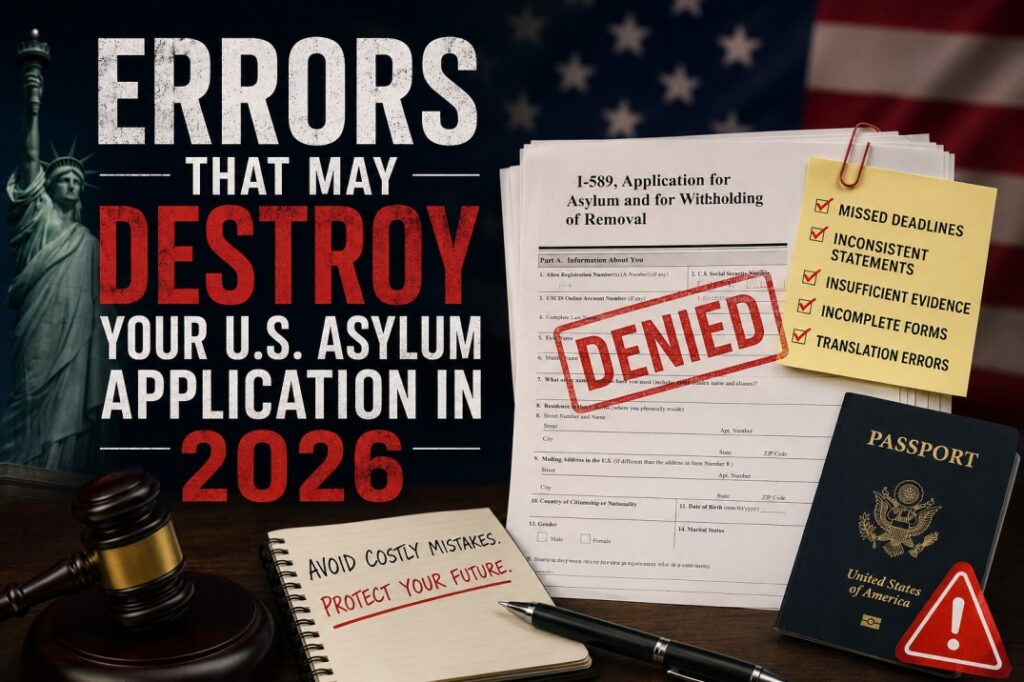
1. Missing the One-Year Filing Deadline
This is the single most common and devastating mistake. U.S. law requires that individuals apply for asylum within one year of their last arrival in the United States. Missing this deadline can result in automatic denial unless you qualify for an exception, such as changed or extraordinary circumstances — and even if you have a valid excuse like illness or trauma, these reasons must meet USCIS’s high evidentiary standards.
Your “arrival date” isn’t always obvious. If you entered multiple times, were paroled into the country, or had your status terminated, determining the correct deadline requires legal analysis. Many people count from the wrong date and file late without realizing it. If you are unsure, please contact the experienced attorneys at Elawrencelaw.com if you have questions about calculating the time frame to file your asylum application.
2. Inconsistencies in Your Testimony and Application
One of the most important parts of any asylum case is credibility. If there are differences between what the applicant writes in their application, says during the interview, or testifies to in court, it can raise doubts and seriously hurt the case. All statements should be carefully reviewed to make sure they are clear, accurate, and consistent.
The form’s apparent simplicity is deceptive. Each question often carries legal implications that may not be immediately obvious, and even strong cases can falter due to misunderstandings or overlooked details.
3. Incomplete or Improperly Filled Form I-589
Under federal regulations, a Form I-589 is considered incomplete if it lacks a response to each question on the form, is unsigned, or is missing required materials. Applicants should use continuation pages where the space provided on the form is insufficient to provide a full response.
Applicants often unintentionally omit residences, particularly those occupied briefly or during turbulent periods, and a mismatch between the narrative of persecution and the listed addresses can raise serious doubts about an applicant’s story.
Matter of H-A-A-V- is a precedent-setting Board of Immigration Appeals (BIA) decision issued in September 2025 that empowers Immigration Judges to quickly dismiss (“pretermit”) asylum applications without a full evidentiary hearing if the application fails to establish basic prima facie eligibility on its face. It is imperative that your asylum be complete and meets basic eligibility to qualify for asylum in the US.
4. Insufficient or Irrelevant Evidence
Even if your fear of persecution is real, you must back it up with strong evidence. USCIS and immigration judges look for identity documents, affidavits, medical records, and country condition evidence. Many people mistakenly believe that their personal testimony alone is enough.
Submitting evidence that’s irrelevant or disconnected from the core of your case is also a mistake. Attaching newspaper articles about general violence in your country does little to strengthen your claim unless you can show a direct link to your personal situation. You must demonstrate why you specifically are at risk based on one of the five protected asylum categories.
5. Filing Too Early Without Adequate Preparation
Filing before you’ve gathered adequate evidence or properly prepared your case can lock you into weak positions that are hard to improve later. Your I-589 application becomes the foundation of your case — changing your story later looks suspicious, even if you’re just adding forgotten details.
6. Errors in Translation and Document Submission
Practitioners must pay attention to any deadlines for evidentiary submissions set by the immigration judge, and a detailed declaration must contain a proper certificate of translation and include the original foreign-language version of documents — failure to include these can result in evidence being rejected.
If you need to correct a mistake after filing, you should send any correction or new evidence so that USCIS receives it at least 14 days before your asylum interview, and at the beginning of the interview, tell the asylum officer about the correction.
7. Conflicting Applications or Pursuing Multiple Benefits Simultaneously
Filing multiple applications or pursuing other immigration benefits simultaneously can create conflicts and inconsistencies that hurt all your cases. Each application must be consistent with the others, and some benefits can actually bar you from receiving asylum.
8. Missing the Appeal Deadline After Denial
If your case is denied, you typically have only 30 days to appeal prior to 2026. In 2026, the administration changed many deadlines to 10 days to file an appeal, and the appeal must meet specific legal and procedural requirements. Many people lose their appeal rights by missing deadlines or filing inadequate appeals.
9. Not Updating Your Address with the Court
Failing to notify the immigration court and USCIS of address changes is a silent case-killer. Missing a court notice because your address is outdated can result in an in-absentia removal order — meaning the judge rules against you without you even being present.
10. Going Through the Process Without an Attorney
Going through the process without a lawyer can make it harder to succeed. Asylum law is complicated, and even small mistakes can lead to denial or deportation. Having an attorney can improve the likelihood of a successful outcome.
Important 2025–2026 Policy Changes to Know
The asylum landscape has shifted significantly:
- Effective May 29, 2026, USCIS will reject pending Form I-589 asylum applications for aliens who fail to pay the Asylum Application Fee.
- USCIS placed an adjudicative hold on all pending asylum applications and is conducting comprehensive re-reviews of cases from nationals of 19 designated “high-risk” countries, including Afghanistan, Haiti, Venezuela, Cuba, Iran, Somalia, and others.
- The government is ending some cases in immigration court before the asylum seeker receives a full hearing — this can happen because of fee problems, facts in the application, or agreements with other countries.